Editorial
Patent Wars
Landmark IP battles, trolls, pharma fights, and the cases that reshaped patent law.
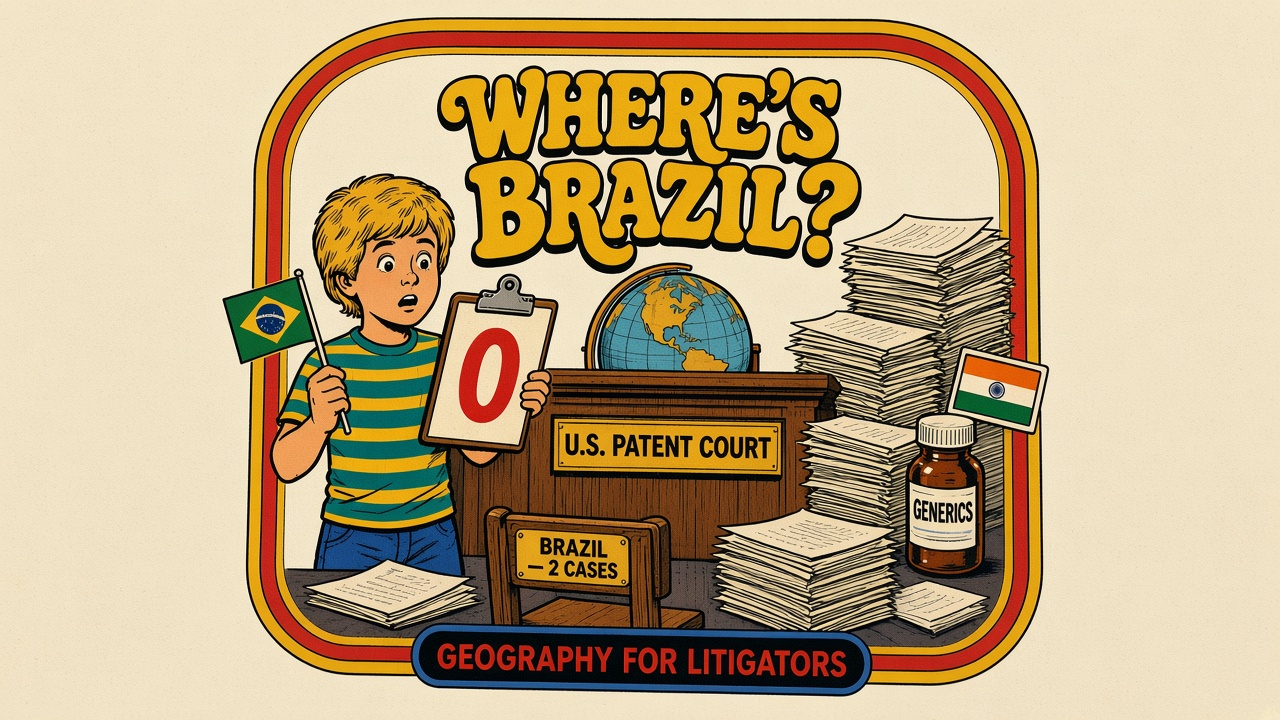
Why Brazil is missing from the world's biggest patent war
Across 74,301 U.S. patent lawsuits, Brazil appears twice. India, another large emerging economy, appears in 1,974, more than Japan or South Korea. The gap has almost nothing to do with talent, and almost everything to do with what each country sells to America.
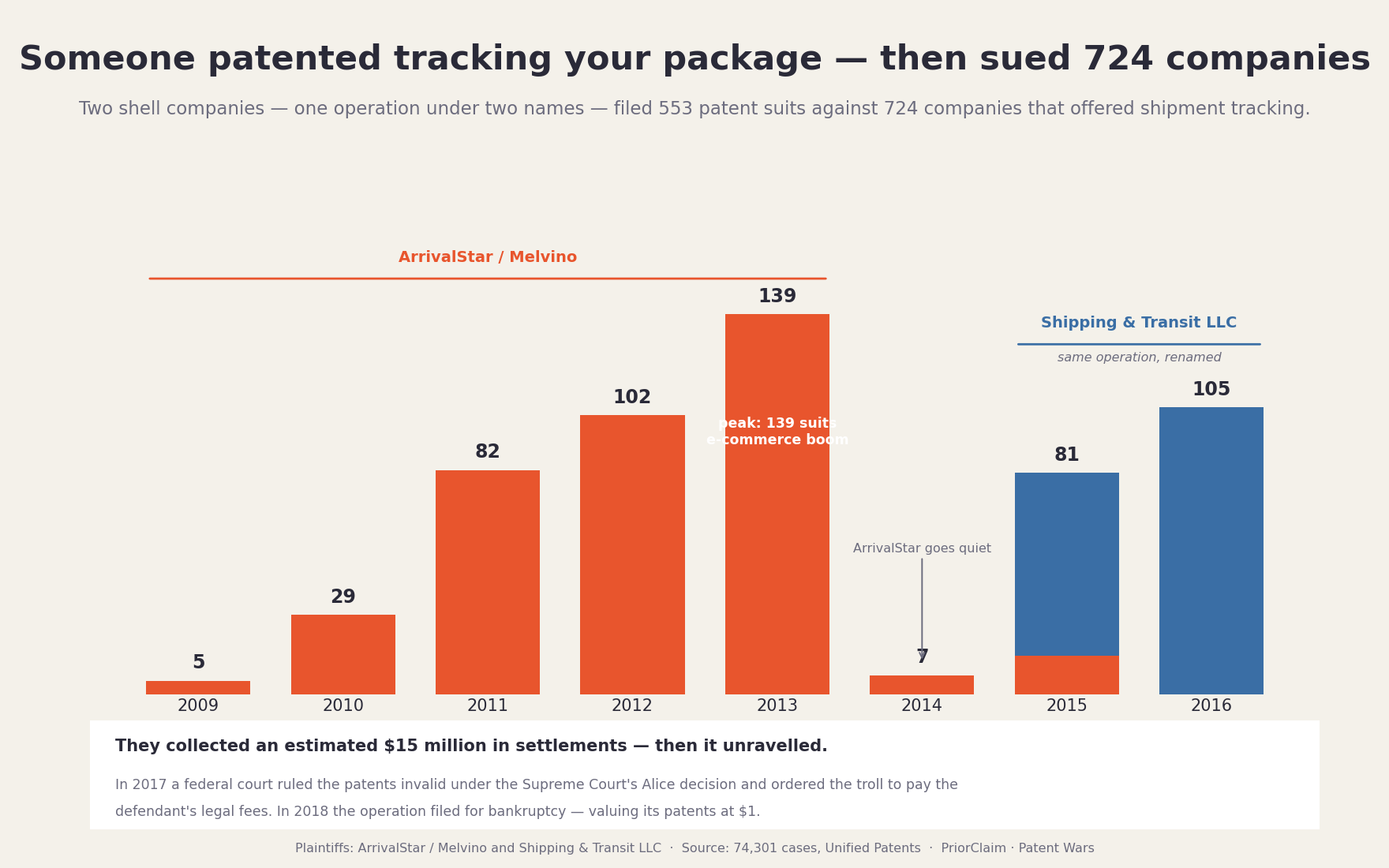
Someone patented tracking your package — then sued 724 companies
You tap "Where is my order?" and expect a dot on a map. In the 2010s, two shell companies decided that idea was theirs — and filed 553 U.S. patent lawsuits against 724 businesses that dared to offer package tracking. They were almost never sued back, and their campaign peaked at 139 suits in a single year.
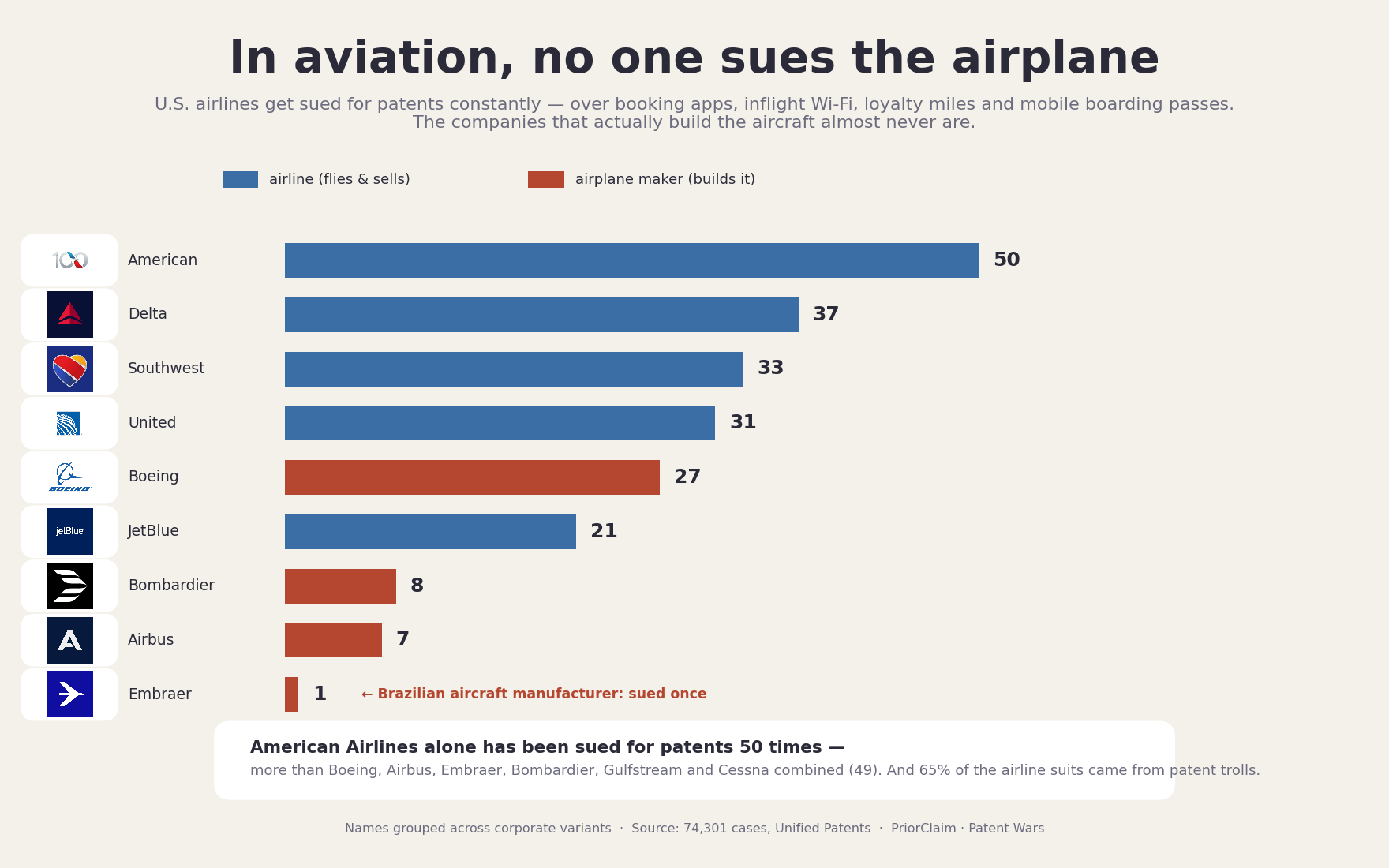
In aviation's patent wars, no one fights over the airplane
American Airlines has been sued for patents 50 times — more than Boeing, Airbus, Embraer, Bombardier, Gulfstream and Cessna combined. The most complex machine humans mass-produce is almost never the target. The app that sells the seat is.
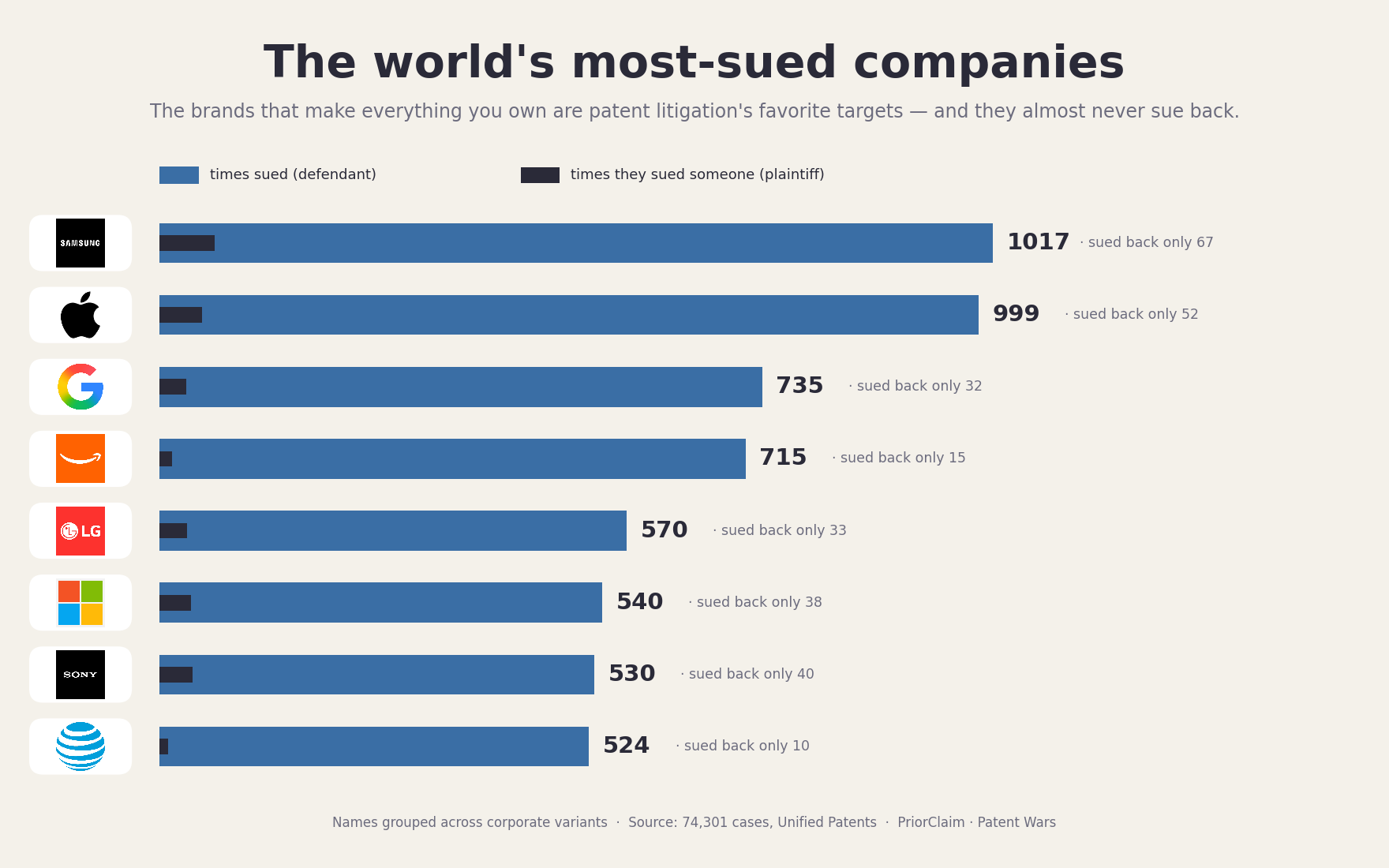
The world's most-sued companies — and why they almost never sue back
The brands that make the devices in your pocket are patent litigation's favorite targets. Samsung has been sued 1,017 times, Apple 999, Google 735, Amazon 715 — and they almost never sue anyone. Amazon was sued 715 times and filed just 15 suits of its own.
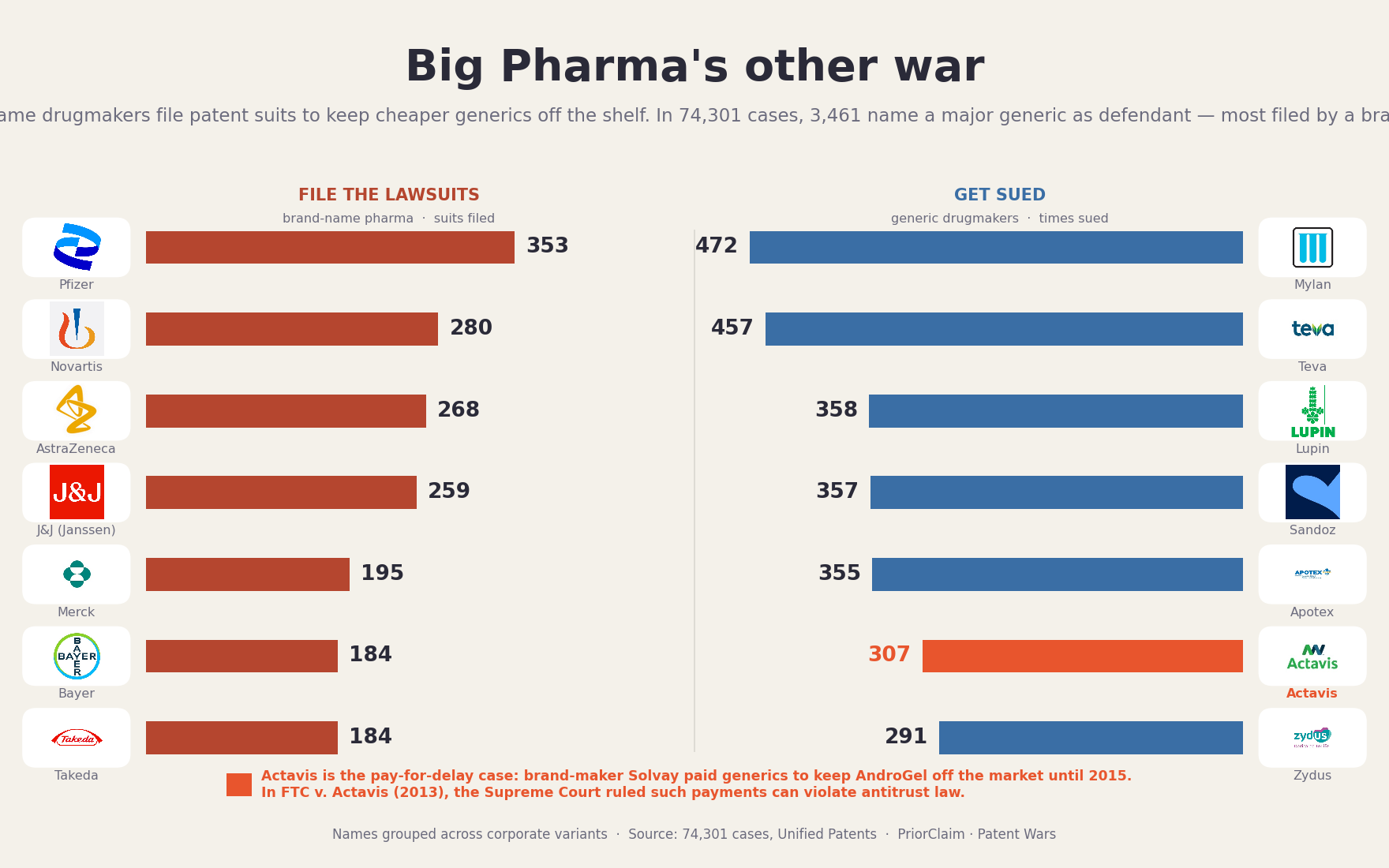
Big Pharma's other war: the lawsuits that keep your generic off the shelf
Every time a cheaper version of a medication is delayed, there is often a lawsuit behind it. In the dataset, 3,461 patent cases name a major generic drugmaker as the defendant — Mylan sued 472 times, Teva 457 — and the companies filing are household names: Pfizer, Novartis, AstraZeneca, Merck.
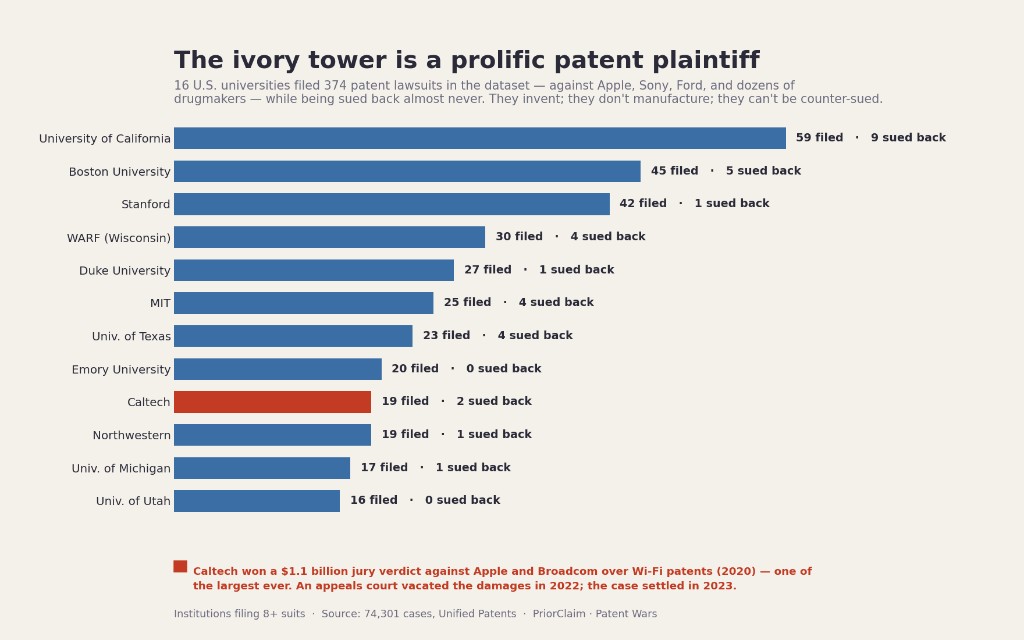
The ivory tower is one of America's most prolific patent plaintiffs
Sixteen U.S. universities filed 374 patent lawsuits in the dataset — against Apple, Sony, Ford and dozens of drugmakers — and were sued back almost never. One of them won a $1.1 billion jury verdict against Apple.
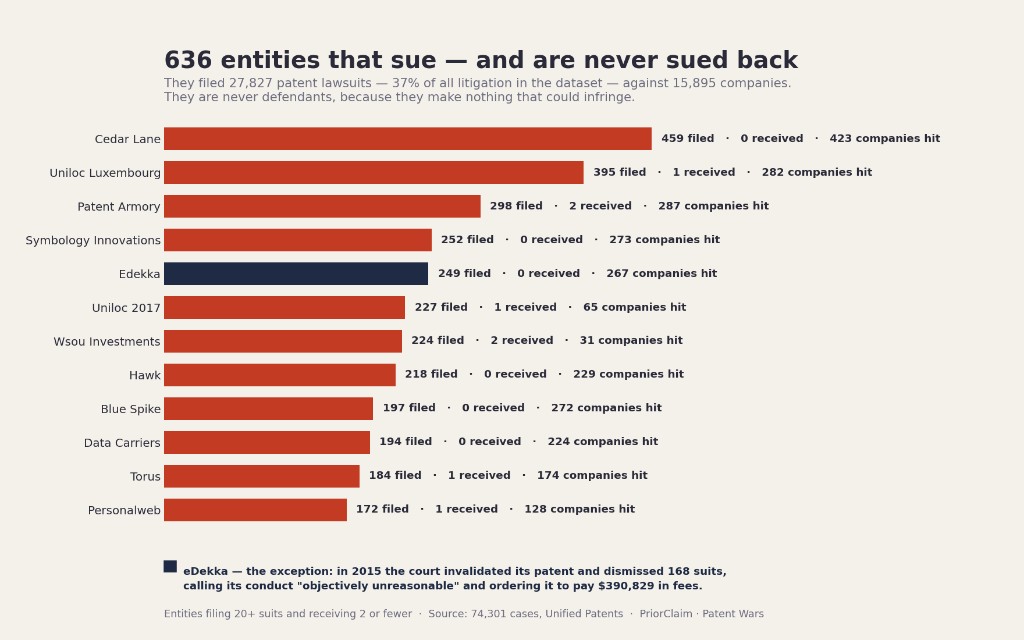
The 636 entities that sue — and are never sued back
636 entities filed 27,827 patent lawsuits against 15,895 companies — and were sued back almost never. Together they account for more than a third of all patent litigation in the dataset.
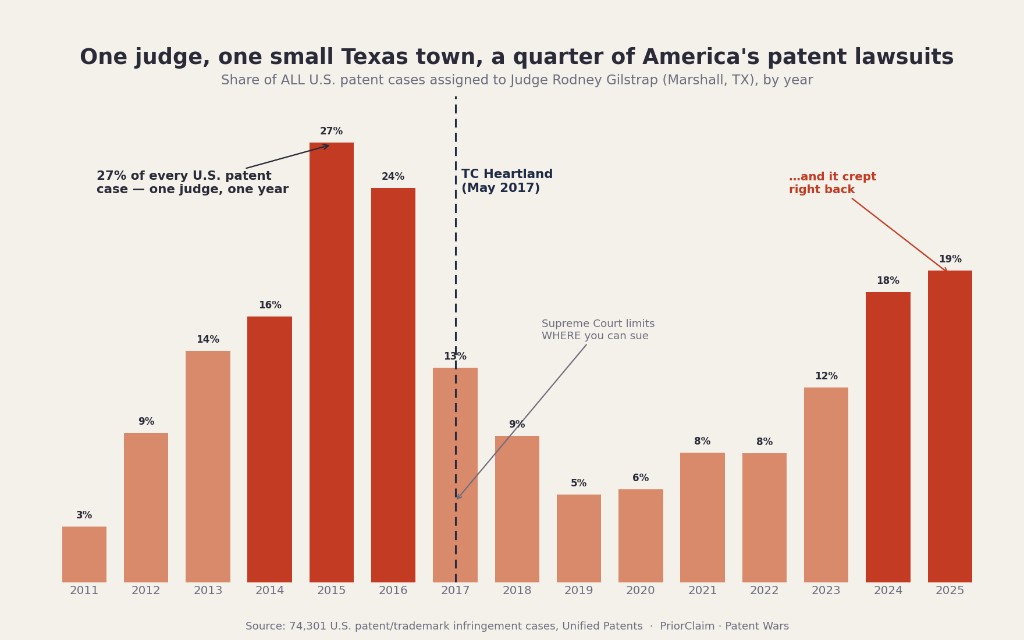
One judge, one small Texas town — a quarter of America's patent lawsuits
One federal judge, in a Texas town of 23,392 people, has handled more than 9,000 U.S. patent lawsuits. At his peak, a single courtroom heard one of every four patent cases filed in the country that year.

PriorClaim is live
A LinkedIn-identified board where provisional-stage inventors request filing support or investment—and IP providers and investors respond with offers—without exposing sensitive evidence in public.